
The Disappearing Hotel: How Properties Can Stay Visible When AI Plans Entire Trips
Roth Miklos
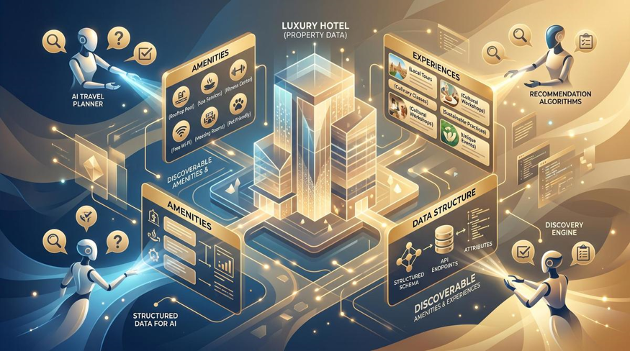
The travel planning landscape is undergoing a profound transformation. Artificial intelligence systems are evolving from simple recommendation engines into comprehensive trip architects that design, book, and manage entire travel experiences autonomously. For hotels, this shift poses an existential visibility challenge: when an AI agent plans a complete itinerary, individual properties risk becoming invisible commodities selected purely on algorithmic criteria rather than distinctive brands.
Traditional hotel marketing has relied upon direct relationships with travelers. Properties invested in website optimization, booking engine performance, loyalty programs, and brand differentiation to capture guest attention during the research and comparison phases of trip planning. When AI intermediaries assume these functions, hotels face disintermediation from their own customers.
The mechanics of AI trip planning reveal why visibility is threatened. These systems optimize across multiple variables simultaneously: transportation logistics, accommodation preferences, activity scheduling, dining reservations, and budget constraints. Hotels enter this optimization as data points defined by structured attributes, location coordinates, price points, and aggregated review scores. The rich narrative of property character, unique amenities, and experiential differentiation that hotels cultivate through traditional marketing barely registers in algorithmic optimization.
Hotels must reimagine their digital presence for an AI-first discovery environment. Structured data implementation becomes critically important. Schema markup for hotel features, amenities, room types, and unique attributes enables AI systems to understand and compare properties with precision. Without comprehensive structured data, even distinctive properties appear as generic commodities to algorithmic planners.
Direct relationship cultivation with AI platforms represents another strategic imperative. Just as hotels established preferred partnerships with online travel agencies, they must now engage with emerging AI trip planning services. Providing rich content, accurate real-time availability, and exclusive offers to these platforms ensures inclusion in the consideration sets that AI systems generate.
Marketing agencies specializing in AI-driven strategies offer valuable expertise for this transition. The team at https://aimarketingugynokseg.hu/en/ provides guidance on how hospitality brands can adapt their digital strategies for emerging AI intermediaries, helping properties maintain visibility as traveler behavior evolves toward automated planning.
Content strategy must shift from human-readable narratives to dual-purpose formats that serve both human guests and AI consumption. Detailed amenity descriptions, precise location context relative to attractions, transparent pricing structures, and authentic visual documentation help AI systems make informed recommendations that favor well-documented properties over competitors with sparse information.
Rate parity and distribution strategy require reconsideration. When AI planners compare options algorithmically, price discrepancies across channels create confusion that can eliminate properties from consideration. Transparent, consistent pricing across all distribution points ensures that AI systems present properties fairly without penalizing them for data inconsistencies.
Guest data ownership emerges as a critical battleground. Properties that build direct relationships with guests, capture contact information, and maintain communication channels independent of intermediaries retain visibility even as AI planners dominate initial discovery. Loyalty programs, direct booking incentives, and post-stay engagement build audiences that AI trip planners must accommodate rather than ignore.
Unique selling proposition articulation demands algorithmic clarity. Properties must distill their distinctive advantages into structured, comparable formats that AI systems can evaluate. Abstract brand positioning statements designed for human consumption require translation into specific, measurable differentiators that algorithmic planners can incorporate into optimization calculations.
The ultimate strategy combines algorithmic optimization with human experience design. Properties that master both dimensions, being simultaneously discoverable by AI systems and memorable to human guests, will thrive as travel planning automation accelerates. Those that neglect either dimension risk disappearing from the traveler journey entirely.
Key Takeaways: - AI trip planners treat hotels as algorithmic data points, threatening brand visibility built through traditional marketing - Comprehensive structured data and schema markup enable AI systems to understand property differentiators - Direct guest relationships and data ownership maintain visibility independent of AI intermediaries - Hotels must optimize for both algorithmic discoverability and human experiential appeal simultaneously
Resources: - https://aimarketingugynokseg.hu/en/
This is a Heading
This is a paragraph. To edit this paragraph, highlight the text and replace it with your own fresh content. Moving this text widget is no problem. Simply drag and drop the widget to your area of choice. Use this space to convert site visitors into customers with a promotion.
© Copyright Szonyegtisztitas